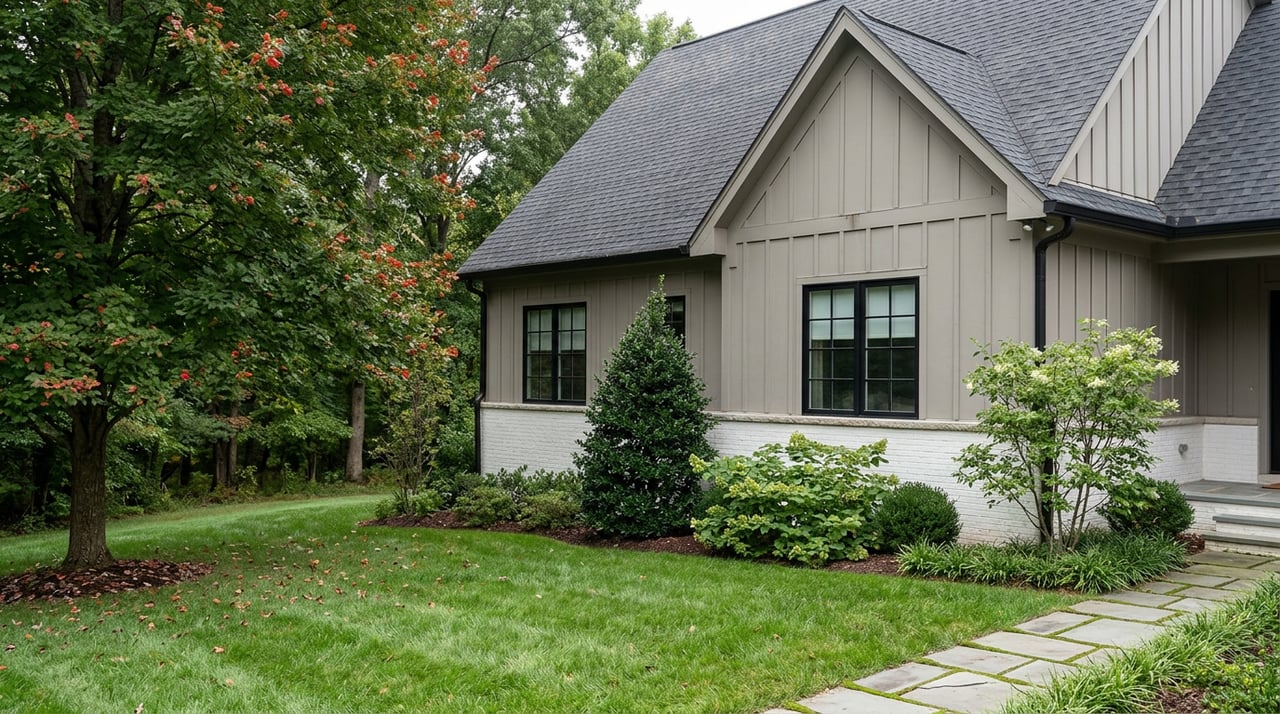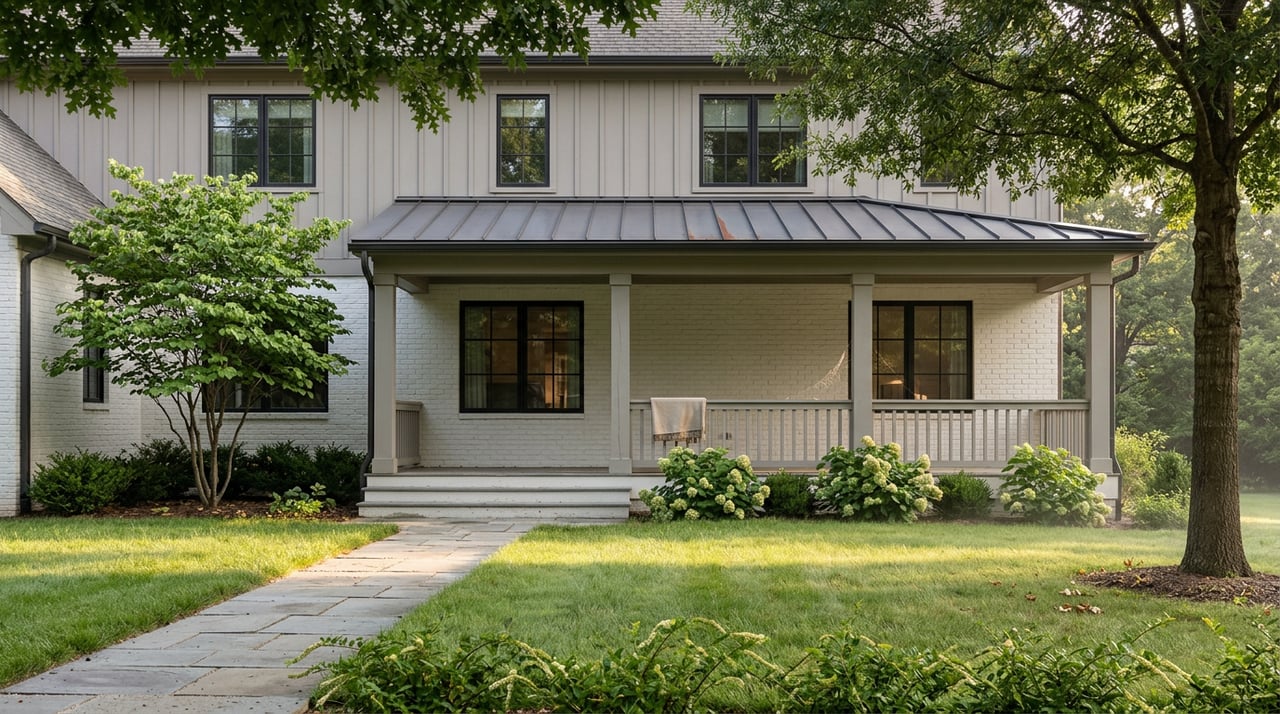

Two Saturday showings, same sign out front. Both properties carry the "Windward" name on the listing sheet, both sit inside the same HOA boundary along Windward Parkway, both come with access to Lake Windward and the Golf Club of Georgia. One was framed and plumbed in 1988. The other closed out its final sale within the last couple of years, built by Toll Brothers as part of a gated 45-home release called Shirley Estates. A buyer touring both in the same afternoon could reasonably assume they're evaluating variations on the same product. They aren't. They're evaluating two different plumbing eras, two different inspection outcomes, and two very different conversations with a seller.
That gap matters more than most Windward marketing lets on, because it changes what actually shows up in an inspection report and what leverage each side holds at the negotiating table.
One Sign, Four Decades of Construction
Windward broke ground in 1985 as a master-planned community organized around a 195 to 200-acre private lake and the Golf Club of Georgia's two championship courses. It grew into more than 40 distinct sub-neighborhoods spread across roughly 3,000 homes, and it kept building for decades after that first phase opened. Recent Census Bureau estimates put the median construction year across the entire community at 1997, but a median year is exactly the kind of number that flattens a real spread. Original sections built through the late 1980s and 1990s sit at one end. Windward's newest release, Shirley Estates, sits at the other, a gated enclave of 45 luxury homes by Toll Brothers priced from the low $1 millions that sold out entirely.
Those two ends of the timeline don't just look different. They carry entirely different risk profiles once an inspector starts opening panels and running a camera down a drain line.
The Decade That Shows Up in the Inspection Report
Homes built roughly between 1978 and 1996 across the Atlanta suburbs, including sections along Windward Parkway and the nearby Haynes Bridge and Jones Bridge Road corridors, were commonly plumbed with polybutylene supply pipe. It's gray, flexible, and was cheap and easy to install at the time. The problem is chemical, not visible. Polybutylene reacts with chlorine in municipal water and becomes brittle from the inside out, so the exterior of the pipe can look completely intact right up until it fails, usually without warning and often into a finished wall.
Georgia doesn't require home inspectors to specifically test for or flag polybutylene during a standard walkthrough, though experienced inspectors will often note it if they spot it. If you're under contract on a home in one of Windward's original sections, built anywhere in that 1978 to 1996 window, it's worth asking your inspector directly to look for it and report on what they find.
Polybutylene isn't the only clock running in those older sections either. Original copper supply lines from that same era are now 30 to 40 years old, entering the window where pitting corrosion starts producing pinhole leaks and slab leaks, independent of whether the home ever had polybutylene at all. And below ground, cast iron and clay sewer laterals from the same period are dealing with root intrusion from mature trees that have had three to four decades to reach toward buried pipe. A standard home inspection assesses what's visible and accessible. It cannot evaluate the interior condition of a buried sewer line, which is exactly why a pre-purchase sewer camera inspection is worth the cost on anything from Windward's late-1970s-through-1990s stock.
Here's the same information organized by era, because the pattern is consistent enough to be useful:
| Windward Era | Typical Plumbing Profile | What to Ask For |
|---|---|---|
| Original sections, built through the late 1980s and 1990s | Possible polybutylene supply lines, aging copper approaching the pitting-corrosion window, cast iron or clay sewer laterals with decades of root exposure | Ask the inspector to specifically identify supply pipe material; consider a separate sewer camera inspection |
| Interior sections built into the 2000s | Copper or early PEX supply lines, PVC sewer lines less prone to root intrusion than cast iron or clay, but still subject to joint offsets from clay soil movement | Standard inspection plus a question about known repiping or sewer work |
| Shirley Estates and other recent Toll Brothers construction | Modern supply and drain materials throughout, no polybutylene-era exposure | Standard new-construction disclosures, not a plumbing-age conversation |
What This Means at the Negotiating Table
Georgia is a caveat emptor state. There's no state law requiring a seller to fill out a disclosure form, and buyers are expected to do their own due diligence rather than rely on the seller to volunteer every issue. But that doesn't mean sellers get to stay silent. Georgia law and the courts have been consistent that a seller who knows about a material defect, one a buyer wouldn't discover through a reasonable inspection, has to disclose it. A buried plumbing problem in a wall or under a slab fits that description far better than a cracked driveway does.
Once an offer is accepted, the buyer typically has a negotiated due diligence period spelled out in the purchase agreement to inspect and raise issues. If polybutylene turns up during that window, buyers commonly come back asking for a price reduction, a credit, or repiping as a condition of closing. That's a predictable, well-worn negotiation, not a deal-killer, but it does shift leverage toward whoever raised the issue first.
For a seller sitting in one of Windward's original sections, that creates a real choice before listing. A whole-home repipe with modern PEX tubing is typically completed in one to two days with targeted wall openings rather than wholesale demolition, and buyers and their agents in the North Fulton market generally recognize a completed repipe as a genuine value-add rather than a nice-to-have. Handling it before a buyer's inspector finds it usually produces a better outcome than negotiating a credit after the fact, when the conversation happens under time pressure and with a due diligence clock running.
Reading the Build Year Before You Write an Offer
None of this requires guesswork. Year built is public record and shows up on the listing itself. If a Windward home you're touring falls between 1978 and 1996, treat that number as a prompt, not a red flag: ask the inspector to identify the supply pipe material by name, and price in a sewer camera inspection if the home is on the older end of that range. If the home is newer, in a section built well into the 2000s or in a recent release like Shirley Estates, that specific plumbing-era conversation mostly falls away, though it's still worth asking what supply and drain materials were used and whether any prior repiping has already happened.
Windward's name on a sign tells you about the lake, the golf courses, and the schools that serve the community. It doesn't tell you which decade you're actually buying into, and in a neighborhood this large, that decade is doing more work than the address.
A Few Questions Worth Asking
Does finding polybutylene automatically end a Windward deal? No. It's a known, common finding in homes from this era across North Fulton, and it's typically resolved through a price adjustment, a credit, or a pre-closing repipe rather than a walked deal.
Is a home in Shirley Estates completely free of plumbing risk? It doesn't carry the polybutylene-era risk of Windward's original sections, since it was built with modern materials well outside that 1978 to 1996 window. Like any home, it still deserves a standard inspection, just not a plumbing-age conversation.
Do Georgia inspectors have to check for polybutylene? Not by requirement. Many experienced inspectors will note it if they see it during a visual walkthrough, but if your target home falls in that build window, it's worth asking your inspector directly to look for it and report specifically on what they find.
If you're weighing a Windward showing this month, or you own a home in one of its original sections and are trying to figure out what a listing conversation should look like, that's exactly the kind of local detail worth walking through before either side signs anything. Christy Smith works this market section by section, not just address by address. Let's Connect.