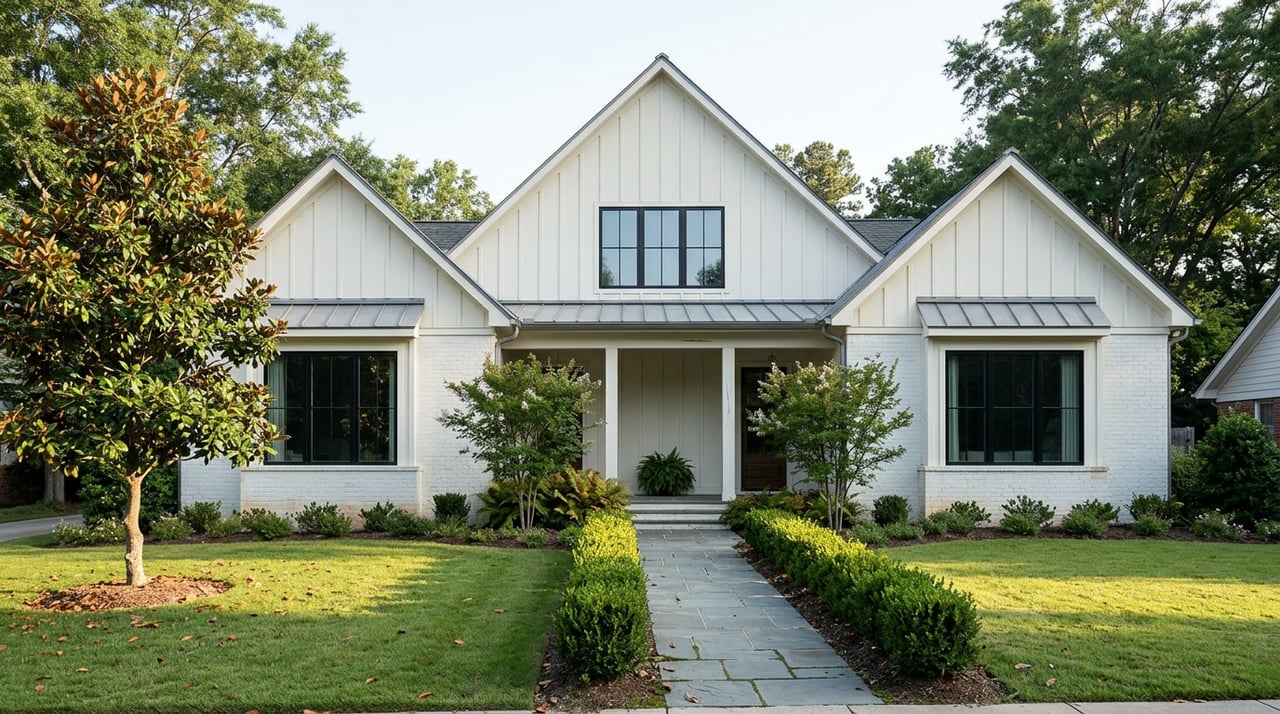
Two listings came across my desk the same week this spring, both tagged "walking distance to Main Street." One sat two blocks off the square, close enough that a buyer could leave a car parked all weekend and never miss it. The other sat on the far side of Towne Lake Parkway, where reaching Main Street on foot meant crossing four lanes of through traffic with no signal for the better part of a block. Same tag. Same marketing language. Very different Saturday morning.
That gap is the whole story behind Downtown Woodstock's premium right now, and it is worth understanding before anyone pays for it.
The Number Behind the Address
Citywide, Woodstock's median sale price sits at $429,743, based on a three month window ending in May 2026, with a citywide median listing price closer to $500,000 according to Realtor.com's more recent count of active inventory. Those are the numbers most buyers see first, and they are useful for a rough sense of the market.
They also flatten a city that does not behave like one market. At the entry end, Weatherstone lists around $369,900 and Ridgewalk around $379,000. At the top, Towne Lake runs closer to $577,000, and the Downtown District itself lists at a median of $637,200. That is close to fifty percent above the citywide sale median, and it holds even before factoring in the attached product downtown, where condos list at a median of $485,000 and townhomes across the city range from roughly $339,500 up to $775,000.
Fifty percent is a real number for a real reason. Buyers are not just paying for square footage downtown. They are paying for proximity to Main Street, to the restaurants and the concert series and the sense that a Tuesday errand can double as a walk. That is a legitimate thing to pay for. The question is whether every address carrying the "downtown" label actually delivers it.
A Walk Score of 53
Redfin's own walkability measure for the Downtown District comes in at 53. That is a moderate score, not a dense urban one, and it means a meaningful share of homes inside the district still require a car, or at least a deliberate route, to reach the restaurants and shops that justify the premium in the first place.
This is not a knock on the marketing. Downtown Woodstock earned its reputation the hard way, through a decades-long push to turn a quiet railroad stop into a place people choose to walk. But a district-wide average of 53 means the label "downtown" is doing a lot of work that individual streets do not always back up. One local buyer's guide put it plainly when it flagged that thoroughfares like Highway 92 carry enough traffic that a listing advertised as walkable may still require crossing a road most people would rather drive across.
If you are comparing two homes both tagged as downtown adjacent, the walk score of the district tells you the average. It does not tell you which side of that average your specific address falls on.
Two Projects, Two Different Downtowns
Part of the reason "downtown" is getting harder to pin down is that two very different projects are expanding it in two different directions at the same time.
The first is the Woodstock Mill District, a $65 million private investment already under construction where Towne Lake Parkway meets Woodstock Parkway, about four tenths of a mile east of I-575. It is an 11 acre, Publix anchored development that will bring roughly 118,000 square feet of retail, including six freestanding buildings for restaurants and shops, blended with the existing Towne Lake Plaza shopping center next door. The developer describes the site as a four minute walk from Main Street and has tied it into the Greenprints Trail system with a ten foot sidewalk connecting to the Old Rope Mill Trail. Construction is delivering in phases through the second half of 2026. In its own announcement, the development team said they were blending the two parcels into one cohesive district, a description that fits the intent even if the address itself sits closer to the interstate than to the square.
The second is City Center, a four acre mixed use redevelopment planned for Main Street itself, with a boutique hotel and a parking deck sized at roughly 650 spaces. That project was still working toward groundbreaking as of mid 2026, with reporting at the time suggesting a start within six months.
Here is the part worth sitting with. The project closest to breaking ground on Main Street, the one that would most directly reinforce the historic downtown's walkability, is behind the project a mile away at the interstate. Buyers paying the downtown premium today are paying, in part, for momentum that is currently strongest at the gateway near I-575, not inside the historic core itself.
The Interchange Isn't Fixing This Yet
There is one more piece of infrastructure worth knowing about if you are weighing a home near that Towne Lake Parkway corridor. The city has been working with the Georgia Department of Transportation on a diverging diamond interchange at Ridgewalk Parkway, aimed at easing one of the more congested pinch points feeding into the area. GDOT's own project materials put the total cost at $13.7 million, with right of way acquisition budgeted for fiscal year 2026 and the utilities and construction phase not funded until fiscal year 2028.
That timeline matters if part of your interest in the Mill District corridor is easier access. As of today, the interchange most people associate with relief from Ridgewalk backups is still the better part of a year from its construction funding, even as the retail around it opens in phases this year.
What This Means If You're Comparing Downtown Addresses
None of this argues against paying a premium for a downtown Woodstock address. It argues for figuring out which downtown you are actually buying into before you sign anything.
A few questions worth asking before you commit to that premium:
- Can you walk the actual route from this address to Main Street on a Saturday morning, not just check a distance on a map? Highway 92 and Towne Lake Parkway are not equivalent to the interior streets around the square.
- Is the home closer to the historic core on Main Street, or closer to the Mill District's gateway position near I-575? Both will likely carry a downtown label in marketing. They are not the same lifestyle.
- If traffic relief near Ridgewalk matters to your daily routine, does your timeline match the fiscal year 2028 construction window, or are you planning around a fix that is still years out?
- For attached product specifically, does the HOA or building sit inside the walk score's higher performing blocks, or nearer the edges where the district's average of 53 is dragged down?
These are not deal breakers. They are the difference between paying for a lifestyle you will use every week and paying for a label that will need a car anyway.
Quick Answers for Downtown Buyers
Does "walking distance to Main Street" mean the same thing across every downtown Woodstock listing? No. The district's walk score of 53 is a moderate average across a range of addresses, some of which require crossing higher traffic roads like Highway 92 to reach the square on foot.
Will the Mill District count as downtown for future resale value? It is being built and marketed as an extension of downtown's identity, positioned about four minutes by foot from Main Street. Whether resale buyers treat it as equivalent to the historic core or as its own gateway district is still an open question the market has not fully answered, since the project is only delivering in phases through the back half of 2026.
Real estate in this part of Cherokee County is changing fast enough that even a downtown address needs a second look before you write an offer. If you are comparing Woodstock's Main Street corridor against the Mill District, Towne Lake, or one of the entry level neighborhoods further out, I would rather walk the actual streets with you than let a listing tag make the case on its own.
Christy Smith has spent years in these neighborhoods and can tell you which side of a walk score your next home is likely to fall on. Let's Connect.